TDS Removal from Water
Total dissolved solids (TDS) is the combined concentration of dissolved minerals, salts, and metals in water, measured in parts per million. Mueller Water lowers TDS with reverse osmosis (95–99% removal), electrodialysis, and ion exchange — for drinking-water taste, scale control, process compliance, and wastewater reuse across Texas.
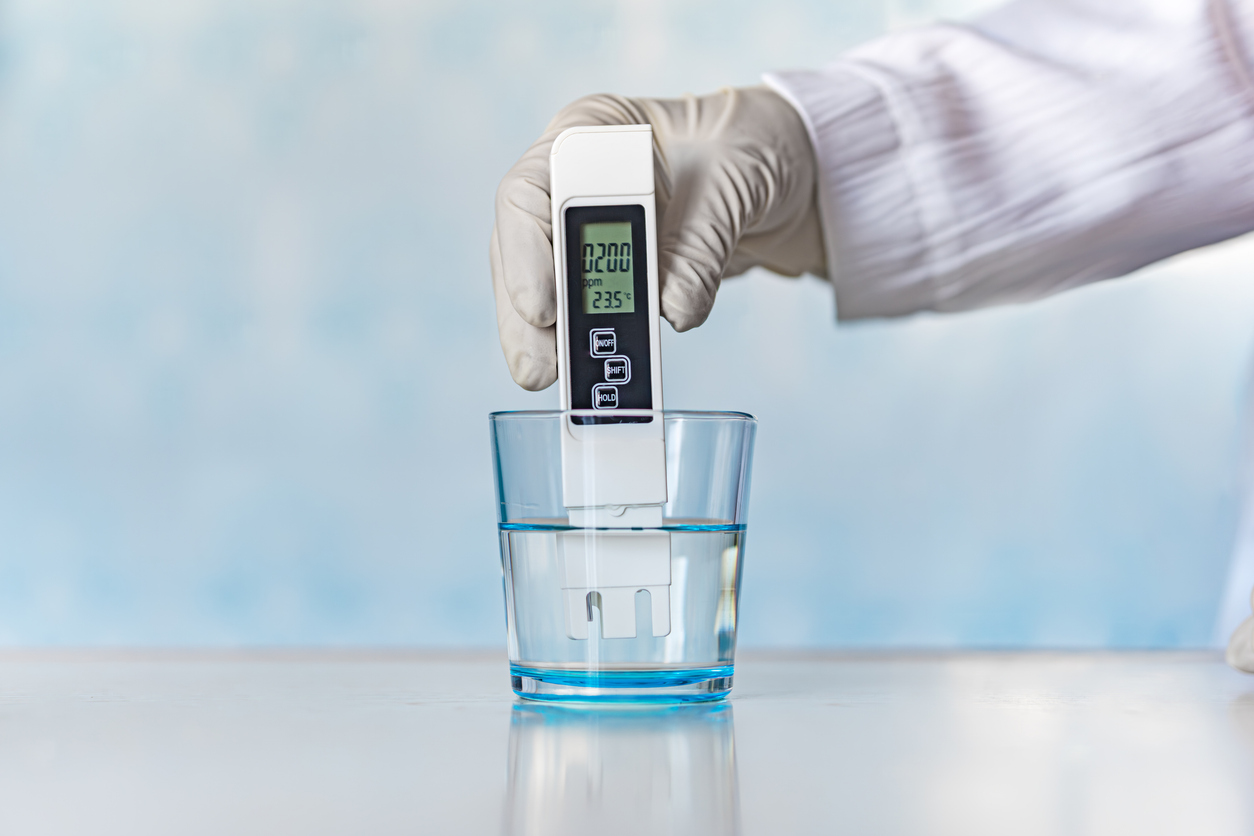
Understanding the TDS Contaminant
Total Dissolved Solids (TDS) refer to the combined content of all inorganic and organic substances dissolved in water. Common sources include minerals, salts, and metals from natural sources, sewage, urban runoff, and industrial waste. High TDS levels can result in poor taste, scaling, and reduced water quality, affecting both health and appliance efficiency.
Typical TDS by Source Water
TDS varies enormously by water source, which is what determines the right reduction technology. The table below gives typical ranges.
| Source water | Typical TDS (ppm) | Notes |
|---|---|---|
| Distilled / deionized water | < 1–10 | Near-zero dissolved solids |
| Municipal tap water | 100–500 | Below the EPA 500 ppm secondary standard |
| Hard well water | 300–1,000 | Common across Texas; varies by aquifer |
| Brackish water | 1,000–10,000 | Typically needs reverse osmosis or electrodialysis |
| Seawater | ~35,000 | Requires high-pressure seawater RO |
For the lowest achievable TDS, pair reverse osmosis with deionization; to compare membrane options, see reverse osmosis vs. nanofiltration.
Solutions for Removal
- Reverse Osmosis: Utilizes a semi-permeable membrane to effectively reduce TDS levels.
- Distillation: Boils water and condenses the steam, leaving solids behind.
- Electrodialysis: Uses an electrical current to separate TDS from water.
Applications
TDS removal is vital for residential, commercial, and industrial applications where water purity and taste are priorities.
Benefits of Removal
Reducing TDS improves water taste, prevents scaling in pipes and appliances, and ensures overall better water quality.
Mueller Water Solutions
Mueller Water offers tailored TDS removal solutions, including advanced reverse osmosis systems and electrodialysis technology, ensuring high-quality water for various applications.
Contact Us
For effective TDS removal solutions, contact Mueller Water today. Our team is ready to design a system that meets your specific water quality needs.
How to reduce TDS in wastewater
Lowering total dissolved solids in wastewater — for discharge limits or reuse — combines a pre-treatment step with a desalination step. The right train depends on your TDS level and what's dissolved.
- Characterize the stream. Measure TDS, the specific ions present (chlorides, sulfates, hardness, silica), suspended solids, and flow. This determines membrane choice and pre-treatment.
- Pre-treat to protect membranes. Remove suspended solids and scale-forming hardness first with media filtration plus softening or antiscalant dosing, so the downstream membranes do not foul or scale.
- Remove dissolved solids with membranes. Reverse osmosis removes 95–99% of TDS and is the workhorse for most wastewater. For high-TDS brines, electrodialysis reversal (EDR) handles concentrations RO cannot.
- Polish if required. For very low residual TDS — reuse as boiler feed or process water — follow RO with ion exchange or electrodeionization (EDI).
- Manage the concentrate. Plan for the reject stream: disposal, further concentration (evaporators or crystallizers for zero-liquid discharge), or blending, since it carries the removed salts.
Frequently Asked Questions
What is Total Dissolved Solids (TDS)?
What TDS level is acceptable in drinking water?
How is TDS removed from water?
Is low-TDS water unhealthy?
Recommended Mueller Products: