EV Battery Production Water Treatment
Reliable water treatment is essential in electric vehicle (EV) battery production to ensure product quality, optimize manufacturing efficiency, and protect sensitive equipment. Technologies like reverse osmosis and deionization play a critical role in maintaining the high-purity water required for battery production, preventing impurities that can compromise performance and product lifespan. Mueller Water offers advanced water treatment solutions specifically designed to support the precision needs of EV battery manufacturing.
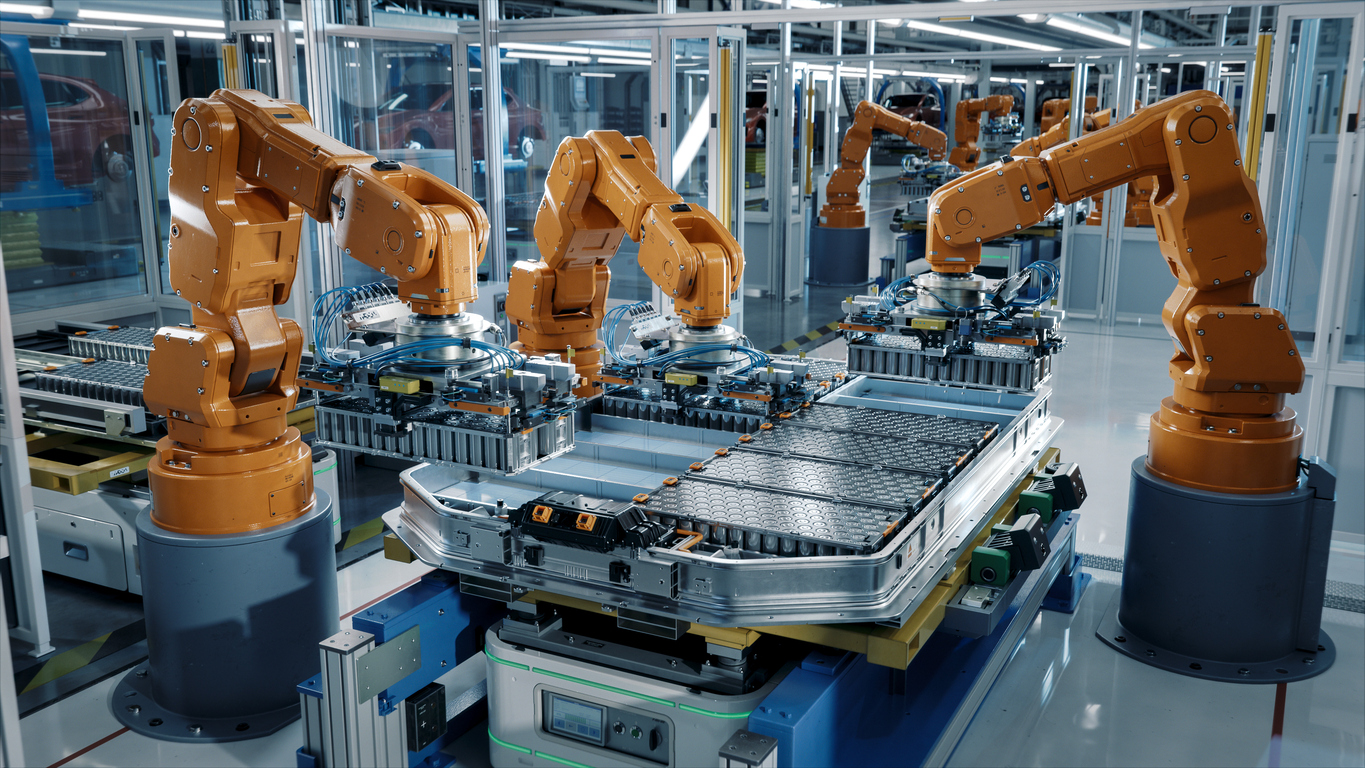
EV Battery Production | Water Treatment Systems
In EV battery production, water purity is paramount to ensure the reliability and performance of each battery cell. Contaminants in water, such as dissolved minerals, metals, and particulates, can interfere with the delicate chemical processes involved in battery production, leading to inefficiencies, reduced battery life, and increased defect rates. At Mueller Water, we provide customized water treatment systems that deliver ultra-pure water to meet the stringent standards of EV battery manufacturing.
The Importance of Water Treatment in EV Battery Production
EV batteries require ultra-pure water to maintain the integrity of the electrolyte solutions and electrode manufacturing processes. Impurities like dissolved ions, heavy metals, and organic contaminants can disrupt chemical reactions, reduce energy capacity, and shorten battery lifespan. Consistently treated water helps ensure that each stage of production — whether it's slurry preparation, electrode washing, or cooling processes — meets the highest standards of purity.
Our Water Treatment Solutions
Mueller Water offers advanced, high-efficiency water treatment solutions tailored to the unique demands of EV battery production. Our systems are designed to remove impurities, control pH levels, and maintain water quality across various stages of manufacturing. Key treatment technologies include:
- Reverse Osmosis (RO) Systems: RO systems are essential for removing dissolved solids, metals, and other contaminants, delivering water with extremely low levels of impurities. This ensures the purity required for critical battery production processes, improving the quality and performance of the final product.
- Deionization (DI) Systems: DI systems eliminate ionic contaminants, providing ultra-pure water that minimizes the risk of contamination in battery cells. Deionized water is particularly crucial for preventing unwanted reactions that can degrade battery components.
- Ultrafiltration (UF) Systems: UF technology removes suspended particles and organic matter from process water, ensuring clear and contaminant-free water for various stages of battery manufacturing.
- Custom Water Treatment Solutions: Our team can design and implement water treatment systems tailored to the specific purity standards and flow requirements of your EV battery production line, supporting each phase from electrode preparation to cooling processes.
Benefits of EV Battery Production Water Treatment
Implementing effective water treatment for EV battery production offers numerous advantages:
- Enhanced Product Quality: Ultra-pure water minimizes contamination, improving the overall quality and reliability of each battery produced.
- Increased Production Efficiency: Clean water reduces the likelihood of defects, allowing for smoother, more consistent production cycles.
- Extended Equipment Lifespan: By reducing scale and corrosion, water treatment protects equipment and lowers maintenance costs over time.
- Improved Environmental Compliance: High-quality water treatment systems reduce waste and support eco-friendly practices in the manufacturing process.
Contact Us Today
At Mueller Water, we understand the critical role that water quality plays in the efficient and precise production of EV batteries. Our team of experts will work with you to design and implement a water treatment solution that meets the stringent requirements of your production line, ensuring high product quality, optimized performance, and cost-effective operation. Connect with us today to learn more about our solutions for EV battery production.