Solar Panel Cleaning
Enhancing Solar Panel Efficiency Through Water Treatment
Clean solar panels are essential for maintaining peak energy production. Mineral deposits, dust, and scale buildup can significantly reduce panel efficiency, leading to lower energy yields and increased maintenance costs. At Mueller Water, we provide specialized water treatment solutions designed to keep your solar panels spotless and operating at full capacity.
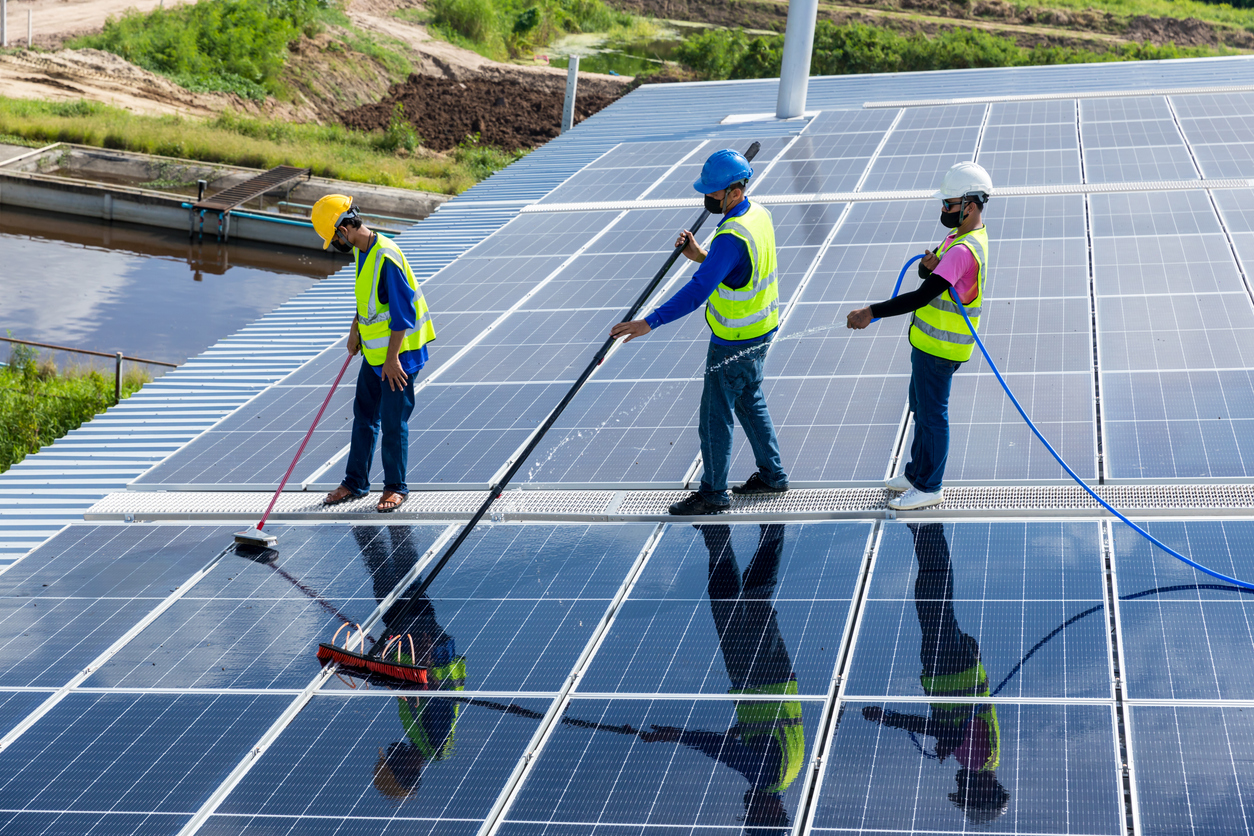
Advanced Water Treatment Technologies
Our water treatment systems are engineered to optimize the cleaning process, ensuring that your solar panels remain free of contaminants:
- Deionization (DI) Systems: Provide pure water that leaves no residue, ensuring streak-free solar panels.
- Reverse Osmosis (RO) Systems: Remove dissolved solids, preventing scale buildup and ensuring a thorough clean.
- Water Softening: Reduces hardness, minimizing the risk of mineral deposits that can cloud solar panels and reduce efficiency.
Applications
Our solutions are ideal for residential, commercial, and utility-scale solar installations. Whether you're maintaining a small home array or a large solar farm, our water treatment systems ensure your panels stay clean and efficient.
Benefits of Solar Panel Cleaning
- Maximized Energy Production: Clean panels generate more electricity, ensuring optimal return on investment.
- Extended System Lifespan: Regular cleaning with treated water prevents wear and tear, prolonging the life of your solar system.
- Reduced Maintenance Costs: Effective water treatment minimizes the need for harsh chemicals and repeated cleanings.
Mueller Water Solutions
Mueller Water offers tailored water treatment systems designed specifically for solar panel maintenance. Our solutions ensure that your panels remain free of dirt, scale, and mineral deposits, keeping your energy production at its peak.
Contact Us Today
Ensure your solar panels operate at their best with Mueller Water's advanced water treatment solutions. Contact us today to discuss your specific needs and discover how we can help you maximize the efficiency and lifespan of your solar panels.
Frequently Asked Questions
How much do dirty solar panels reduce efficiency?
Why use deionized water for solar panel cleaning?
How often should solar panels be cleaned?
Can rainwater be used for solar panel cleaning?
Recommended Mueller Products: