Cooling Towers Water Treatment Systems
Proper water treatment for cooling towers is essential to maintain efficient operation, prevent scale formation, and extend equipment lifespan. Cooling towers require high-quality water, free from impurities that can cause scaling, fouling, and biological growth, which can reduce heat transfer, increase energy consumption, and lead to costly maintenance. At Mueller Water, we provide advanced water treatment solutions designed to optimize the performance of your cooling tower system, enhance efficiency, and minimize operational costs.
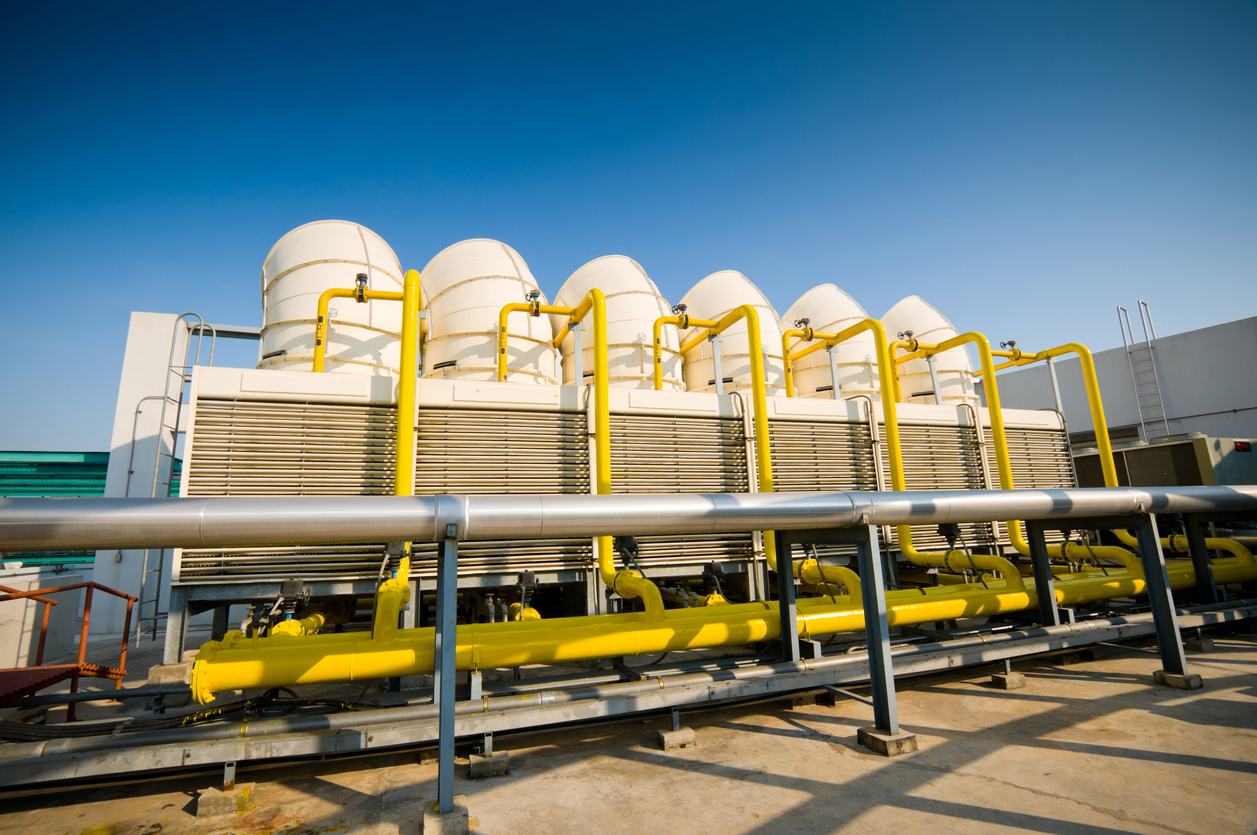
The Importance of Cooling Tower Water Treatment
Cooling towers are critical components in many industrial and commercial HVAC systems, providing essential heat rejection for processes and equipment. The water used in cooling towers is subject to constant evaporation, leading to increased concentrations of dissolved solids and other impurities. Without proper treatment, these impurities can form scale, promote corrosion, and create an environment for biological growth, such as algae and bacteria. These issues can significantly reduce the efficiency of your cooling tower, leading to increased energy consumption, higher operational costs, and potential system failures.
Our Water Treatment Solutions
Mueller Water offers comprehensive water treatment solutions tailored to the specific needs of cooling tower applications. Our systems are designed to control scale, corrosion, and biological growth while ensuring that the water used in your cooling tower meets the highest quality standards. Key treatment technologies include:
- Chemical Treatment: We provide a range of chemical solutions to prevent scale formation, inhibit corrosion, and control biological growth, ensuring your cooling tower operates efficiently and reliably.
- Side-Stream Filtration: Our filtration systems remove suspended solids from the water, reducing fouling and maintaining the cleanliness of your cooling tower system.
- Water Softening: By reducing hardness in the water, our softening systems help prevent scale buildup and improve the overall efficiency of your cooling tower.
- Dealkalization: Softening removes hardness but leaves alkalinity untouched, and it is bicarbonate alkalinity that limits how many cycles of concentration a tower can safely run. A dealkalizer on the makeup line lets the tower hold higher cycles — less blowdown, less makeup water, and lower sewer cost.
Where source water carries high bicarbonate, dealkalizer water treatment on the makeup line is frequently the cheapest lever available on a tower’s water bill, because it attacks the constraint on cycles directly instead of dosing more scale inhibitor to tolerate it.
Benefits of Cooling Tower Water Treatment
Implementing effective water treatment for your cooling tower offers numerous advantages:
- Improved Efficiency: Treated water ensures better heat transfer, reduces energy consumption, and enhances the overall performance of your cooling tower system.
- Extended Equipment Lifespan: Proper treatment minimizes the risk of scale, corrosion, and biological growth, protecting your cooling tower and extending its operational life.
- Lower Maintenance Costs: With reduced fouling and scaling, the need for frequent cleaning, repairs, and downtime is minimized, resulting in lower operating costs and increased productivity.
- Enhanced Safety and Compliance: By maintaining clean and treated water, your cooling tower operates safely, reducing the risk of Legionella and other harmful bacteria, and ensuring compliance with health and safety regulations.
Why Choose Mueller Water?
At Mueller Water, we understand the critical role that water quality plays in the efficient operation of cooling tower systems. Our experienced team will work closely with you to design and implement a customized water treatment solution that meets the specific requirements of your cooling tower application. We are committed to providing high-quality systems and services that help you achieve optimal performance, reduce operating costs, and extend the life of your equipment.
For peak summer cooling load or makeup water during a system outage, Mueller also offers mobile water treatment rental equipment — softeners and RO skids deployed across Texas without permanently oversizing your system.
Contact Us Today
Maximize the efficiency and reliability of your cooling tower with Mueller Water's advanced water treatment solutions. Contact us today to discuss your cooling tower water treatment needs and discover how we can help you maintain peak performance and ensure the longevity of your system.
Frequently Asked Questions
Why does cooling tower water need treatment?
What is "cycles of concentration" and why does it matter?
How is Legionella controlled in cooling towers?
What technologies are used in cooling tower water treatment?
Recommended Mueller Products: