Boiler Feed Water Treatment
Effective water treatment for boiler feed water is important to prevent scale, corrosion, and inefficiencies. Using technologies like reverse osmosis and deionization enhances boiler performance, reduces energy consumption, lowers maintenance costs, and extends equipment lifespan.
Boiler Feed | Water Treatment Systems
Proper water treatment is critical for boiler feed applications to ensure efficient operation, prevent scale buildup, and extend equipment lifespan. Boilers require high-quality water, free from impurities like dissolved solids, minerals, and gases, which can cause corrosion, scaling, and reduced heat transfer. At Mueller Water, we offer advanced water treatment solutions, including reverse osmosis, deionization, and chemical treatment, to deliver purified water that meets the stringent requirements of boiler systems.
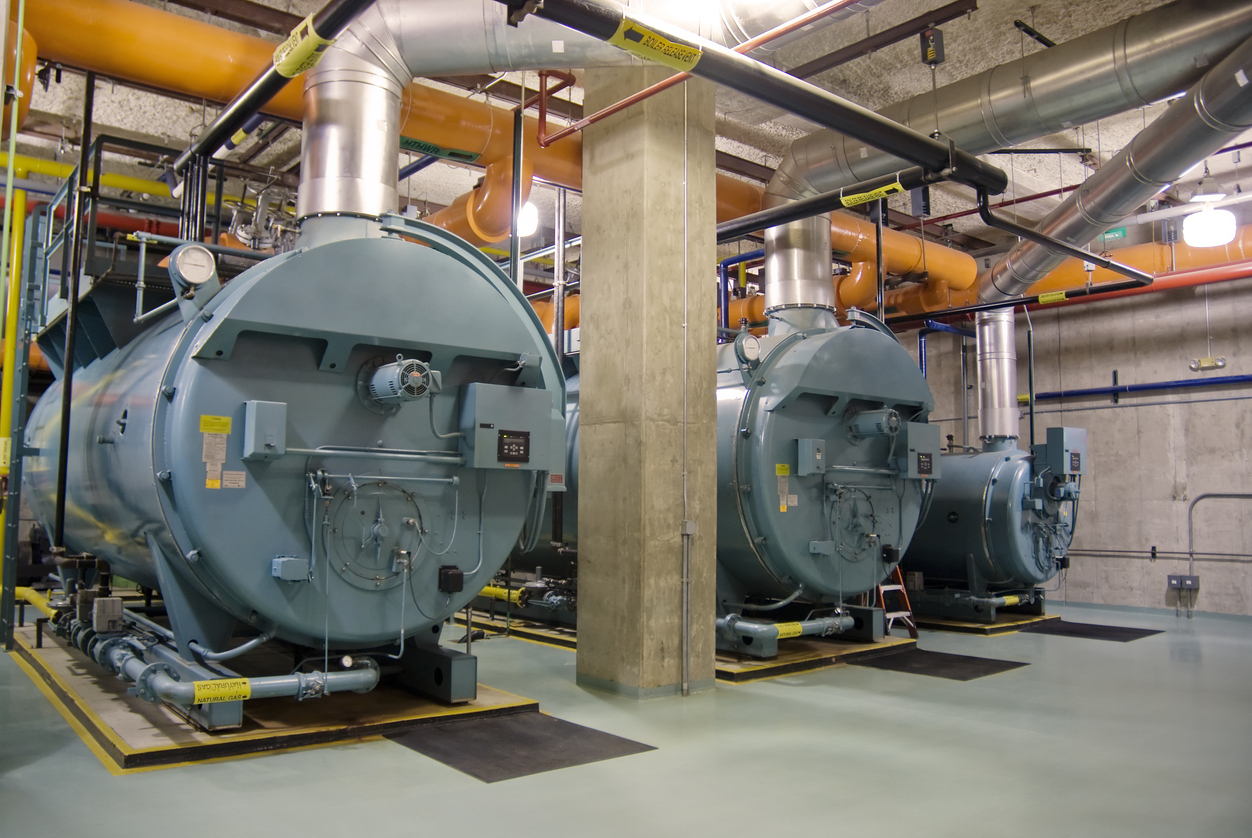
The Importance of Boiler Feed Water Treatment
Boilers are integral to various industrial processes, and their efficiency is directly influenced by the quality of the water used as feed. Untreated or poorly treated water can lead to several issues, including scale formation, corrosion, and fouling, which reduce the efficiency of the boiler, increase fuel consumption, and lead to costly repairs or downtime. Scale buildup, in particular, acts as an insulating layer, reducing heat transfer and requiring more energy to achieve the same level of steam production. Corrosion, on the other hand, can weaken boiler components, leading to leaks or even catastrophic failure.
Our Water Treatment Solutions
Mueller Water provides comprehensive water treatment solutions tailored to the specific needs of boiler feed applications. Our systems are designed to remove impurities, control pH levels, and ensure that the water used in your boiler is of the highest quality. Key treatment technologies include:
- Water Softening: Softeners remove the calcium and magnesium that form hard scale on boiler tubes. This is the first step in nearly every boiler feed pretreatment train, and the foundation everything downstream is sized against.
- Dealkalization: A dealkalizer removes the bicarbonate and carbonate alkalinity that breaks down to carbon dioxide inside the boiler, driving up blowdown and corroding condensate return lines. Cutting alkalinity at the front end lowers fuel cost and reduces the internal chemistry the boiler needs.
- Reverse Osmosis (RO) Systems: RO systems are highly effective at removing dissolved solids and other impurities, producing water that is ideal for boiler feed.
- Deionization (DI) Systems: DI systems remove ionic contaminants, providing ultra-pure water that helps prevent scale and corrosion in boiler systems.
- Chemical Treatment: We offer a range of chemical treatment solutions to control pH levels, inhibit corrosion, and prevent scale formation, ensuring your boiler operates efficiently and reliably.
Most industrial steam plants run softening first and dealkalizer water treatment second, adding RO only when operating pressure and steam-quality requirements push past what that pair can hold. Which combination is right depends on your feedwater analysis, steam load, and fuel cost — we model it before recommending a configuration.
Benefits of Boiler Feed Water Treatment
Implementing effective water treatment for your boiler feed water offers numerous benefits:
- Enhanced Efficiency: By using treated water, you can improve heat transfer, reduce energy consumption, and optimize the performance of your boiler system.
- Extended Equipment Lifespan: Proper treatment minimizes the risk of scale and corrosion, protecting your boiler and extending its operational life.
- Reduced Maintenance Costs: Treating water reduces the need for frequent maintenance, repairs, and downtime, leading to lower operating costs and increased productivity.
- Improved Safety: By preventing issues like corrosion and scale buildup, water treatment contributes to the safe operation of your boiler system, reducing the risk of accidents or failures.
Contact Us Today
At Mueller Water, we understand the critical role that water quality plays in the efficient operation of boiler systems. Our team of experts will work with you to design and implement a water treatment solution that meets the specific needs of your boiler feed application. We are committed to providing high-quality systems and services that help you achieve optimal boiler performance, reduce operating costs, and ensure the longevity of your equipment.